
Susanne Richter took over as International HR Director at GoodMills a year ago. She tells us what convinced her to make the move to GoodMills, how the company wants to position itself as an employer, and the benefits this brings for customers.
Susanne, if GoodMills was a person, how would you describe them?
As someone who draws on their sense of inner calm and stability. But at the same time, as someone who also recognises the signs of the times and is constantly evolving. Communicative, a unifier and someone who uses resources carefully.
At the moment, you’re working on giving GoodMills a sharper profile as an employer. What exactly does that involve?
Generally speaking, our country organisations are well placed. But in future, we want to make even better use of synergies, especially in areas such as sustainability, the labour market and supporting the next generation of talent, so that we can become even stronger as a group. We want to send a clear message through our shared employer brand: if you work for us, you’re doing something meaningful – “work for food, work for good”, as we say. That helps our people to identify more closely with the company. At the same time, though, it’s important that we offer guidance: how are we positioned from a technology standpoint and what steps do we want to take in the future?As far as our external image goes, it’s a matter of breaking free from age-old cliches: nowadays, milling is a modern, high-tech sector with specialised job profiles.
What will be the jobs of the future in milling?
We need highly trained technology specialists, above all process engineers. People who see technology as an integral part of their work and can apply concepts such as performance management, Lean Six Sigma and total productive maintenance (TPM). This is how we bring knowledge and innovation directly into the company.
There’s also strong demand for lab technicians. And we need effective managers who address their team’s needs in line with a given situation, as well as applying modern methods and playing a part in shaping technological developments. Put simply, the future of milling will revolve around people who can combine modern production, new technologies and the human element.
“The future of milling will revolve around people who can combine modern production, new technologies and the human element.”
Susanne Richter, International HR Director at GoodMills
Where can you find high potentials who fit the bill?
Supporting the next generation of employees, as well as human resource development, will be the key focuses over the coming years. We can see that state education systems are coming up short in some countries. So we want to take action to counter this. In 2026 we’re going to launch the “Grain IQ” milling academy with the support of an external partner, UK Flour Milling. To begin with, we’ll offer a 12 to 14-month training programme focused on core milling, where participants will be trained as milling specialists in line with our high standards. We’re starting in the Czech Republic and the plan is to gradually roll the programme out to other countries from there. The goal is to provide in-depth training.
Who is “Grain IQ” aimed at?
At first, we’ll be targeting employees who are already working in milling and want to develop their skills profile. Later on, staff working in other areas will also have the opportunity to complete the training. In the long run, we want “Grain IQ” to evolve into a brand that enables us to reach out to the right people and ensure that we have the necessary expertise for the future.
How will the programme work?
It’s based on the principle of blended learning: alongside online modules in an app, courses will also take place in the mill, so participants can apply the skills they learn under the guidance of experienced trainers, who will be trained in house. Throughout the programme, trainees will be accompanied by a mentor, and there will be regular knowledge checks, too. The final step in the training is a comprehensive assessment.
Why is a strong employer brand also important for customers?
A strong employer brand creates stability. And this benefits our customers, too. If employees have the opportunity to develop within the company, this helps to keep expertise inside the business, while the experience they gain also results in greater reliability in production. This reliability leads to increased efficiency, consistent quality and an even more mindful approach to food safety.
What’s more, a strong image as an employer also bolsters our contribution to sustainability – because dedicated employees pay closer attention to resources, processes and supply chains. And finally, this represents an investment in the future of the entire industry. By providing our customers with reliable supplies of high-quality products, we’re not just securing their future – in the long term, we’re also safeguarding people’s access to basic foodstuffs.
“A strong employer brand creates stability.”
Susanne Richter, International HR Director at GoodMills
What convinced you personally to make the move to GoodMills?
It was the people more than anything else. I already knew a few people who worked here – some of them had been with the company for many years. That’s always a good sign for me. In my eyes, values also play a key role. I only enjoy working towards a goal that I’m fully committed to. And that’s definitely the case at GoodMills. The company is stable – and at the same time it’s open to taking the next step into the future. Things are constantly evolving here. That opens up space for creativity, which is something I find very stimulating.
To finish off, can you give us any career tips?
Build on your strengths. And find a job that you enjoy doing, something that inspires you.
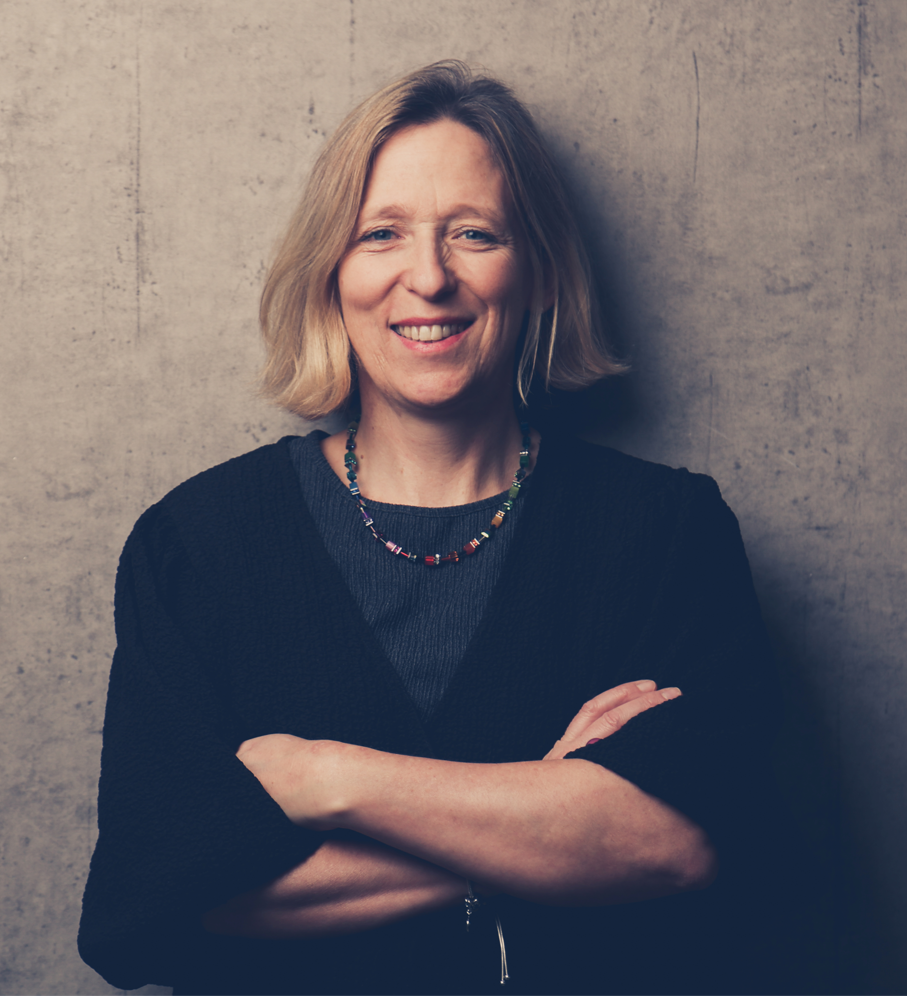
International HR Director at GoodMills
In profile
Susanne Richter has always been fascinated by production processes. After working for Rexam, Semperit and Mondelez, in January 2025 she switched to GoodMills. As International HR Director (Group HR Director), her responsibilities include overseeing the development of the group's people and culture.